April 2026 | The CESWP Leadership Letter
Supervision is often experienced as something you have to get through to become licensed.
It’s understandable, especially in high-demand settings where supervision is compressed, inconsistent, or treated as a requirement rather than a meaningful space.
But supervision is one of the most influential elements in our field.
It shapes clinical decision-making, ethical practice, burnout and retention, and professional identity.
When supervision is treated as something to move through, we miss an opportunity to meaningfully support clinicians and the clients they serve.
Approached with intention, supervision becomes a core part of sustaining the profession.
What kind of supervision had the greatest impact on you early in your career?
This Month’s Reflection
A situation came up recently that has stayed with me.
A supervisor described a moment where a supervisee became escalated during feedback: interrupting, raising their voice, and shifting into disrespectful language.
The question wasn’t whether the moment was difficult.
It was what to do in it.
Our field is well trained in empathy, reflection, and repair.
We are often less practiced in authority, boundaries, and containment, especially in our early career years.
So when moments like this happen, the instinct is often to slow things down and process in real time.
But not every moment calls for that.
Some moments require something different: Containment before exploration.
When a supervisee is yelling, speaking over, or engaging in disrespectful communication, the supervision space is no longer functioning as it should.
At that point, the task is not to process.
The task is to pause the interaction and restore the container.
That might sound like:
“I’m going to pause us here. This conversation isn’t feeling productive, and the way we’re speaking to each other has shifted. Let’s come back to this when we can engage more constructively.”
That’s not punitive. That’s professional.
Where this becomes more complex is what happens next.
If this is a one-time rupture, it can be explored and repaired in a future session.
But if the pattern repeats (if feedback consistently leads to escalation), then the conversation shifts.
Not toward repair, but toward evaluation.
Supervision is not just a relational space. It is a professional one.
Support matters. So does accountability.
And when those are in tension, supervisors are responsible for holding both.
If we treat every rupture as something to process, we risk avoiding something essential:
Not all behavior should be worked through in the moment.
Some behavior should be stopped.
This Month’s Resource
Many of the challenges social workers and therapists are facing right now are often framed as individual problems.
Burnout.
Fatigue.
Disconnection.
But much of what we’re experiencing is shaped by the systems we work within.
I created a free reflective workbook to explore that more clearly.
When the Work Isn't the Problem: A Reflective Workbook for Social Workers in Complex Systems
It’s designed for clinicians who want to understand their experience without defaulting to self-blame.
You can access it here:
Free Reflective Workbook for Social Workers
Going Deeper
The Clinical Supervision Training Program continues this infrastructure work at a systems level. Summer 2026 cohorts are currently open for registration. Registration for Fall 2026 will open on May 1, 2026.
If you’d like to explore the full program details, you can learn more here:
View the Clinical Supervision Training Program
If you prefer early updates or reminders about future cohorts, you’re welcome to join the waitlist:
Colorado Community
Colorado colleagues, I’m excited to share that I have a small number of openings for individual supervision with agency social workers this spring.
This is especially meaningful right now, as many clinicians are working in systems where supervision is stretched thin.
If you’re wanting a supervision space that is thoughtful, structured, and actually supportive of your clinical development, I’d love to connect.
Learn About Individual Supervision with Bethany
Fireweed Community Room
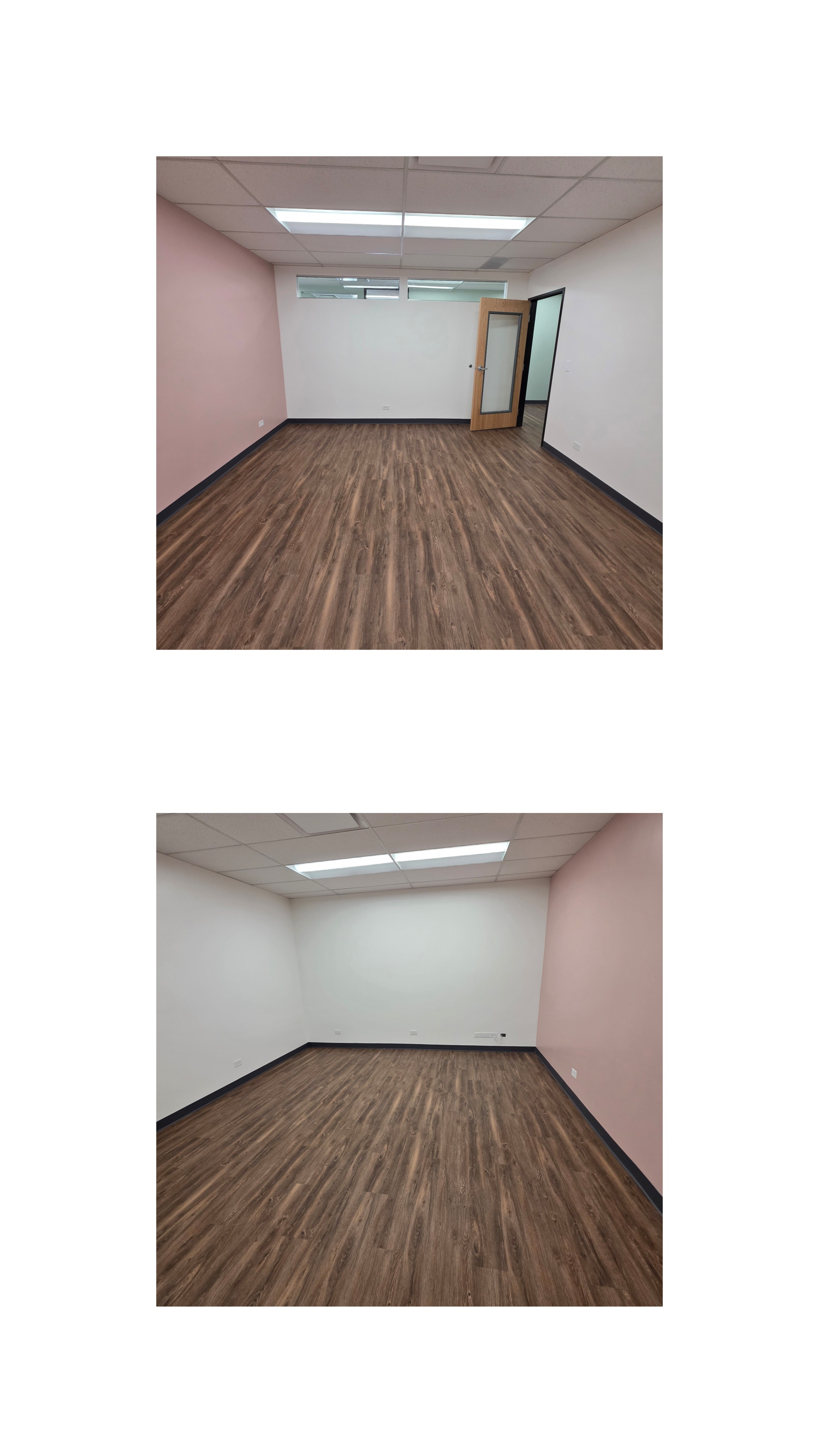
The Fireweed Community Room is beginning to take shape.
This space is being built intentionally: for consultation, ethical dialogue, small trainings, and the kinds of professional conversations that don’t always have a place in traditional settings.
It’s still in process, but already becoming something I care deeply about, and I’m looking forward to sharing it as it continues to come together.
In addition to the community room, a limited number of offices will be available for full or part-time rental for clinicians seeking a grounded, collegial practice environment.
More to come as the space continues to develop.
Supervision is often treated as something to complete.
But it is one of the places where the profession is actively shaped.
What we do in that space matters.
Thank you for being part of this professional community.
Bethany Raab, LCSW, ACS
Center for Ethical Social Work Practice

Responses